Chapter 13: Proposals
Crafting Effective Proposals
Your team has developed a brilliant engineering solution — one that could reduce waste, improve efficiency, or even save lives. But before your idea can make an impact, it must first persuade someone to say yes: a client, a supervisor, a funding agency. That’s where the engineering proposal comes in. More than just a technical document, a proposal is your chance to make a case — not only clearly and logically, but persuasively and ethically. Successful engineers know how to present their ideas with integrity, tailoring their message to the needs and values of their audience, while staying true to their responsibilities as professionals. This chapter will teach you how to craft proposals that are not only effective, but also ethical — that is, grounded in honesty, transparency, and respect for those you aim to serve.
Structuring the Proposal
Most engineering proposals follow a predictable structure — not because creativity is discouraged, but because a clear, logical format helps readers quickly find the information they need to make decisions. Each section plays a distinct role in guiding the reader from problem to solution, building a persuasive case along the way. Table 13.1 outlines the typical sections of an engineering proposal.
Table 13.1 Typical sections of an engineering proposal.
| Section | Purpose |
|---|---|
| Executive Summary | Gives a concise overview of the proposal’s key points and recommendations |
| Introduction | Defines the problem or need and establishes context |
| Background/Problem Statement | Provides detailed context and justifies the need for action |
| Objectives | States what the proposal aims to achieve |
| Proposed Solution | Describes the design, method, or approach to solving the problem |
| Plan of Action | Explains how the solution will be implemented, step by step |
| Timeline | Lays out a schedule for project tasks and milestones |
| Budget | Breaks down the costs and justifies the resources needed |
| Qualifications | Demonstrates the credibility and capabilities of the project team |
| Conclusion | Reinforces the proposal’s value and calls for action |
Writing the Letter of Transmittal
When you send a proposal to a client, it should be accompanied by a letter of transmittal. This document introduces your proposal, highlights its purpose and key points, and accompanies the proposal as a stand-alone document (which is why it is not included in Table 13.1).
A letter of transmittal is much like the cover letter for a job application. Just as a cover letter highlights the most important points in your résumé, the letter of transmittal briefly explains what your proposal is about and why you have prepared it. It should summarize the proposal’s purpose, point out key recommendations that may interest the reader, and explain the action you would like them to take. The letter also lists the materials you are sending and provides your contact information in case the reader has questions.
The organization of a letter of transmittal is straightforward. It begins with the sender’s and recipient’s names and addresses, followed by a salutation and an introduction that states the proposal’s title and purpose. The body summarizes key persuasive points, while the closing paragraph thanks the recipient, offers to answer questions, and ends on a positive note. The letter concludes with a formal closing, the sender’s signature and full name, and a note about any enclosures.
Writing the Executive Summary
The executive summary is one of the most important parts of an engineering proposal — especially when your audience includes busy decision-makers who may read only this section before making a judgment. Its purpose is to provide a concise but complete overview of the entire proposal, highlighting the problem, your proposed solution, the benefits, and key details such as cost and timeline. Think of it as a stand-alone summary that tells the reader what you’re proposing and why it matters, without requiring them to read the full document. For example, if you’re proposing a campus-wide energy-saving system for your class project, your executive summary should briefly explain the energy problem, outline your proposed system, mention its environmental and financial benefits, and give a rough estimate of cost and implementation time. Although it appears at the beginning of the proposal, the executive summary should be written last so you can accurately reflect the content.
The language in an executive summary should be clear, direct, and professional. Avoid overly technical jargon unless you’re certain your audience is familiar with it. In most cases, assume the reader is knowledgeable but not specialized in your specific area. Use plain language to explain complex ideas, and keep your tone confident but objective. Your goal is to inform and persuade efficiently, so choose precise words, use active voice, and keep sentences concise.
Remember too that the executive summary should be “stand-alone,” meaning that it doesn’t direct the reader to other sections of the proposal. All necessary information must be found within the summary itself.
Task: Read through the example executive summary below. Try to match each sentence (or sentence pair) to a section of the proposal it reflects.
Executive Summary
This proposal seeks funding to develop a modular, solar-powered water purification system designed for use in remote and disaster-affected regions. Around the world, millions of people lack reliable access to clean drinking water, especially in areas where infrastructure is damaged or nonexistent. The proposed system combines photovoltaic technology with a compact membrane filtration unit to produce clean drinking water without reliance on grid power or fuel. Initial field tests have demonstrated the unit’s ability to purify up to 500 liters of water per day using only solar energy, making it both sustainable and scalable. With funding, our team will refine the design for mass production, conduct broader field trials, and partner with NGOs for deployment in high-need communities. The total project budget is $150,000 over 12 months, with anticipated impact including improved public health, reduced reliance on bottled water, and enhanced resilience in off-grid areas.
Writing the Introduction
The introduction to the proposal plays a critical role in setting the stage for readers, guiding them from a broader context to a specific problem in need of a solution. It sets the persuasive foundation for the rest of the proposal by 1) making the reader care about the problem and 2) building trust in the proposers’ ability to solve it.
To persuade the reader that the problem deserves attention, the introduction should include evidence of its urgency or impact — preferably backed by plausible evidence and mention of real-world consequences. At the same time, the writers work to establish credibility by demonstrating a solid grasp of the issue and, where appropriate, referencing relevant expertise, experience, or previous work. A strong introduction also appeals to the values of the reading audience. This could mean aligning the need for a solution with broader goals such as sustainability, equity, or technological advancement. Finally, while the bulk of the solution will be outlined in subsequent parts of the proposal, the introduction will likely hint at the proposed innovation to provide direction.
Writing the Background/Problem Statement
The Background or Problem Statement section of an engineering proposal expands on the introduction by providing a deeper, evidence-based explanation of the problem the proposal aims to solve. Its primary purpose is to demonstrate that the problem is real, well-defined, and significant — one that requires a practical and innovative response. This section typically includes technical details, data, prior research, and examples that show how the problem has developed, why current solutions are insufficient, and who is affected. It also helps define the scope and boundaries of the proposed solution, clarifying what is and isn’t included.
Functionally, this section strengthens the proposal’s logical appeal (logos) by grounding it in facts and data, and it often reinforces credibility (ethos) by showing that the writer has done thorough research and understands the complexities involved. A well-written problem statement sets up the reader to fully appreciate the relevance and effectiveness of the proposed solution that follows.
Step 1: Provide context and background to the problem
Begin by establishing the need for a solution through clear, well-developed background information. A helpful strategy is to think like a journalist: reporters often rely on a set of “wh” questions — what, who, when, where, and why — to uncover the full context of a story. You can use these same questions to examine the problem you’re addressing. What exactly is the problem? Who is affected by it? When and where does it occur? Why does it matter? Provide data, observations, or examples that show the scale or urgency of the issue. Answering these questions will help you frame the issue clearly, highlight its significance, and lay a solid foundation for your proposal.
Step 2: Establish realistic constraints and criteria for success
Defining clear constraints and criteria for success is the next crucial step in any engineering proposal. Constraints set boundaries — including limits on cost, size, energy use, materials, etc. — to ensure your solution is grounded in real-world conditions. Criteria for success, on the other hand, provide measurable goals that guide the design of the solution. Both constraints and criteria for success must be based on background knowledge and previous research. Together, these elements show that you have considered practical limitations and are committed to delivering a solution that meets predefined needs.
Some examples for the solar-powered water filter introduced earlier are as follows:
Constraints
- Power Source — Must operate entirely on solar energy with no dependency on grid electricity or fuel.
- Portability — The unit must be compact and lightweight enough for transport by two people.
- Water Quality Standards — Must meet or exceed WHO guidelines for safe drinking water.
- Cost Limit — Production cost must not exceed $500 per unit to ensure affordability for NGOs.
- Maintenance — System must be low-maintenance and operable with minimal technical training.
Criteria for Success
- Output Capacity — Can purify at least 500 liters of water per day under average sunlight conditions.
- Deployment Readiness — Can be set up and operational within one hour in the field.
- User Feedback — Receives positive feedback (satisfaction rating of 85% or higher) from field testers in target communities.
- Durability — Operates reliably for at least one year in outdoor conditions without major repairs.
- Scalability — Design is adaptable for production at scale (1,000+ units) without major redesign.
Consider the following tips and strategies as you craft the problem statement.
- Be Specific and Focused — Clearly define one central problem or need. Avoid vague or overly broad descriptions. For example, instead of “energy is wasted,” write “municipal buildings in Region X lose an estimated 25% of heating energy due to outdated insulation systems [3].”
- Use Evidence to Support Your Claims — Back up the problem with relevant data, statistics, or case studies. Cite credible sources or provide results from prior assessments, surveys, or pilot studies. This builds logical appeal (logos) and strengthens your argument.
- Show Why It Matters — Explain the consequences of not addressing the problem — economic, environmental, social, or operational. Frame the problem in a way that aligns with your reader’s priorities or mission (e.g., efficiency, safety, accessibility, innovation) and tailor the urgency to your audience’s interests (e.g., cost savings, sustainability for NGOs).
- Acknowledge Limitations of Current Solutions — Briefly identify existing approaches and explain why they fall short. This justifies the need for your proposed innovation without going into your solution just yet.
- Define the Scope — Clarify what aspects of the problem your proposal addresses and what it does not. This helps manage expectations and keeps the proposal focused.
- Use a Professional, Objective Tone — Write clearly and without emotional language. Keep the tone respectful, even when critiquing existing methods.
Proposing a Solution
This section is the heart of your engineering proposal. It’s where you explain how you plan to solve the problem you’ve defined. This is where your creativity, technical understanding, and practical thinking come together to offer a clear, actionable response to the need you’ve established. The goal is not just to describe what you intend to do, but to show why this solution is the best fit given the problem’s context, constraints, and goals.
From a technical perspective, your description should be precise, feasible, and grounded in sound engineering principles. You should explain the main features of your proposed design or method, supported by diagrams or references to existing research or models where appropriate. Anticipate practical questions a reviewer might ask: How does this work? What makes it different from existing options? Can it be implemented with available resources?
From a persuasive perspective, this section must do more than inform. It must convince. Your audience needs to believe that your solution is not only technically sound but also appropriate, cost-effective, and aligned with their values or priorities. To achieve this, use clear and confident language, anticipate counterarguments, and frame your proposal in terms of the benefits it delivers. Highlight how your solution meets the criteria for success, stays within the constraints, and addresses the needs of those affected by the problem. If multiple solutions were considered, briefly explain why the chosen one is superior.
A strong proposed solution section blends technical accuracy with rhetorical awareness — showing that you understand the problem, have thought carefully about your approach, and are offering a practical, responsible, and persuasive answer.
Detailing the Plan of Action
The Plan of Action outlines how you will carry out your proposed solution — step by step. While the previous section explains what you plan to do, this section focuses on how you will do it. It typically includes a breakdown of tasks, a timeline for completion, roles and responsibilities (if working in a team), and any necessary resources such as tools, facilities, or partnerships. The goal is to give your reader confidence that your project is not just a good idea but a well-thought-out and executable plan.
When writing this section, clarity and structure are essential. Organize your plan logically, often in phases (e.g., design, prototyping, testing, implementation), and use tools like Gantt charts or task lists if appropriate. Be realistic about the time and resources each step will require, and avoid vague or overly optimistic descriptions. Specificity helps establish your credibility.
From a persuasive standpoint, the Plan of Action demonstrates your reliability and preparedness. A strong plan shows that you’ve anticipated challenges, accounted for dependencies, and created a roadmap that makes the proposal feel not only possible but likely to succeed. Readers — especially those considering whether to approve funding or support — want to see that their investment will be used effectively. Consider the concerns of your audience: Are the steps logical? Are the milestones measurable? Does the timeline make sense given the scope of the project? Addressing these questions head-on strengthens your proposal by showing not only that your ideas are innovative but also that you are organized, responsible, and ready to deliver results.
Using Gantt Charts to Visualize the Timeline
A Gantt chart is a visual tool used to map out a project’s timeline by showing when each task will occur, how long it will take, and how tasks relate to one another. Named after mechanical engineer Henry Gantt, this type of chart is especially useful in engineering proposals because it presents complex project plans in a clear and accessible format.
Each row in a Gantt chart represents a specific task, and horizontal bars show the start and end dates of that task. Tasks are typically arranged in chronological order, and dependencies (e.g., Task B can only start after Task A is complete) can also be represented.
Important: Labels in the Gantt Chart must exactly match the wording used in the plan of action.
Key Considerations for Creating a Gantt Chart
When mapping out your project timeline, keep the following key considerations in mind for creating an effective Gantt chart:
- Break the project into phases and tasks — Identify major phases (e.g., research, design, testing) and break them into specific, actionable tasks.
- Sequence tasks logically — Make sure the order of tasks reflects real-world dependencies (e.g., you can’t test a prototype before it’s built).
- Show overlapping tasks if appropriate — Some tasks may be done in parallel; Gantt charts help visualize these overlaps.
- Use milestones — Mark major events (e.g., “Prototype Completed”) to track progress.
- Keep it simple and readable — Especially for class projects or short proposals, avoid excessive detail—focus on the big picture.
Figure 13.1 shows a simplified Gantt Chart for a project.
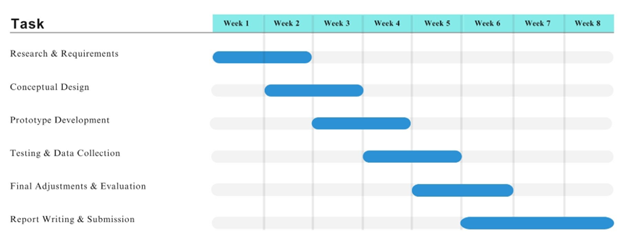
Fig. 13.1 Timeline for the proposed research project.
Detailing the Budget
The Budget section of an engineering proposal outlines the financial resources required to carry out the proposed project. It serves two main purposes: to show that your plan is financially feasible and to justify each expense clearly and reasonably. Even in undergraduate class projects — where funding may be hypothetical — crafting a thoughtful budget helps develop essential project planning and communication skills.
The budget must project professionalism, realism, and responsibility. Reviewers are more likely to approve a project if the budget is
- Well-researched (showing you’ve done your homework);
- Transparent (suggesting nothing is hidden or excessive); and
- Aligned with project goals (showing every item clearly contributes to success).
Avoid padding the budget, underestimating costs, or omitting essential items. These can all raise red flags about the viability of the project. A persuasive budget says to the reader, “We know what we’re doing, we know what it will cost, and we’re ready to make it happen.”
Key Considerations When Writing the Budget Section
When writing the budget section of your proposal, keep the following considerations in mind to ensure clarity and accuracy:
- Be specific and itemize costs — Break down costs into clear categories (e.g., materials, equipment, labor, software, testing). Avoid vague lump sums.
- Use a table format — Present your budget in a clean, organized table with columns for item, quantity, unit cost, total cost, and justification if space allows.
- Include a total — Sum all costs at the bottom, and round appropriately to reduce clutter.
- Justify expenses — If unclear, briefly note why expenses are necessary. This builds credibility and prevents the budget from seeming inflated or arbitrary.
- Include contingency, if appropriate — For real-world proposals, a small contingency (typically 5–10%) may be included to account for unforeseen expenses. For student projects, this can be mentioned as a best practice.
Finding Realistic Budget Figures
Use the following sources to ensure your cost estimates are accurate and believable:
- Manufacturer websites and catalogs — Find component pricing from websites of companies like DigiKey, McMaster-Carr, Home Depot, or Adafruit.
- Online marketplaces — Find approximate costs for basic tools or kits on Amazon, eBay, and Alibaba.
- University resources — If the project proposes the use of lab space or university equipment, check internal documentation or ask instructors for estimated usage costs.
- Past projects — Review sample budgets from previous student work or ask your instructor for examples.
- Vendor quotes (optional) — For ambitious projects, request quotes from suppliers or distributors.
Example Budget Table with Labor Costs
Project Title: Solar-Powered Water Purification System
Team: Undergraduate Engineering Capstone Group
Estimated Hourly Rate for Labor: $20.00/hour
Table 13.2 Proposed Budget for Solar-Powered Water Purification System
|
Item / Task |
Quantity / Hours |
Unit Cost |
Total Cost (CAD) |
Justification |
|
Materials & Equipment |
||||
|
Solar panel (50W) |
1 |
$80.00 |
$80.00 |
Powers the purification system. |
|
Water pump (DC, submersible) |
1 |
$45.00 |
$45.00 |
Pumps water through the filtration unit. |
|
Filtration cartridges (5-stage) |
2 |
$25.00 |
$50.00 |
Multi-stage filtration for safe water. |
|
Microcontroller (e.g., Arduino) |
1 |
$35.00 |
$35.00 |
Controls system operation. |
|
Battery storage (12V, 10Ah) |
1 |
$60.00 |
$60.00 |
Stores solar power. |
|
Enclosure materials (plastic) |
1 set |
$30.00 |
$30.00 |
Weather-resistant housing. |
|
Misc. electronics (wiring, etc.) |
1 set |
$25.00 |
$25.00 |
Circuitry, connectors, switches, etc. |
|
3D printing (casing) |
5 hrs |
$10.00/hr |
$50.00 |
Fabrication of external housing. |
|
Water testing kit (basic) |
1 |
$40.00 |
$40.00 |
Measures water quality before and after purification. |
|
Labor / Work Time |
||||
|
Research and requirement analysis |
10 hrs |
$20.00/hr |
$200.00 |
Background work, constraints, and benchmarking. |
|
Design and system planning |
15 hrs |
$20.00/hr |
$300.00 |
Schematic design, component selection. |
|
Prototyping and assembly |
20 hrs |
$20.00/hr |
$400.00 |
System build and hardware integration. |
|
Software programming/testing |
10 hrs |
$20.00/hr |
$200.00 |
Microcontroller coding and debugging. |
|
Testing and evaluation |
12 hrs |
$20.00/hr |
$240.00 |
Water testing, performance assessment. |
|
Report writing and documentation |
10 hrs |
$20.00/hr |
$200.00 |
Final report, presentation, and supporting documents. |
|
Contingency (5%) |
– |
– |
$89.75 |
Safety buffer for small unexpected costs. |
|
Total Estimated Cost |
– |
– |
$2,069.75 |
Writing the Qualifications Section
This section highlights the strengths of the team and demonstrates that the people involved have the skills, knowledge, and experience necessary to successfully complete the proposed project.
The most important goal in this section is to show a strong alignment between each person’s qualifications and the tasks they are responsible for. For example, in a proposal that is part of coursework, if one team member is leading the system design, the paragraph should emphasize relevant coursework (like circuits or fluid mechanics), past projects, or technical skills (such as CAD or Arduino programming). If another member is handling testing and data collection, their paragraph might highlight strengths in experimentation, data analysis, or lab experience. The following example illustrates how a qualification paragraph can effectively emphasize relevant expertise and contributions.
Daniel Kim — Water Systems Engineering Lead
Daniel Kim is an environmental engineer with over eight years of experience in sustainable water treatment and resource management. He specializes in designing portable purification systems that combine renewable energy with low-cost filtration technologies. His work focuses on bringing reliable access to clean drinking water in disaster zones, rural communities, and regions lacking traditional infrastructure.
For the CleanWater initiative, Daniel led the design of a solar-powered purification system capable of producing up to 500 liters of potable water per day. He integrated advanced filtration units with off-grid solar technology, ensuring the system remains effective in diverse field conditions without relying on fuel or grid power. Under his technical leadership, the prototype achieved a 40% reduction in operating costs compared to conventional portable units, while maintaining WHO standards for drinking water quality. In this project, Daniel will oversee system design, ensure compliance with water quality standards, and guide the integration of sustainable technologies to optimize performance.
Each team member can write a short paragraph about themselves, focusing on the specific contributions they’ll make and how their background supports that work. This isn’t a full résumé. It’s a targeted summary that reinforces credibility and shows the team is well prepared. Writing this section well shows not only that you have the right expertise, but also that you’ve thoughtfully organized the work based on your team’s collective strengths.
Conclusion Section
The Conclusion of a proposal is your final opportunity to persuade the reader and reinforce the value of your project. While it may be brief, it plays a crucial role in summarizing the key points and leaving a strong, confident impression. A well-crafted conclusion should restate the problem, highlight the proposed solution, and emphasize the benefits or impact of the project — especially how it meets the criteria for success and aligns with the reader’s goals or values. From a persuasive standpoint, the tone should be clear, positive, and forward-looking. Avoid introducing new technical details; instead, focus on affirming that your team is ready, capable, and committed to delivering results. A strong conclusion may also include a call to action — normally a request for approval, support, or funding — so that the reader knows exactly what you’re asking for. In short, the conclusion should wrap up the proposal with clarity, confidence, and purpose. The following example demonstrates how an effective conclusion can reinforce the proposal’s key points and leave the reader with a clear final message.
Conclusion
Access to clean drinking water remains a critical challenge in remote and disaster-affected regions, where traditional infrastructure is unreliable or nonexistent. Our proposed solution — a portable, solar-powered water purification system — offers a sustainable, low-cost, and easy-to-deploy response to this urgent need. Designed to operate independently of fuel or grid power, the system is capable of purifying up to 500 liters of water per day using only sunlight and replaceable filtration units. Our design is grounded in engineering principles, shaped by real-world constraints, and supported by a well-organized plan of action. With the necessary funding and support, our team is fully prepared to build, test, and evaluate the system within a structured eight-week timeline. We respectfully request your approval to move forward with this project, which has the potential to make a meaningful impact on public health and sustainability in underserved communities.
This is a strong conclusion because it restates the main problem — access to clean drinking water — and connects it directly to the proposed solution. It highlights why the system is practical and sustainable, while also showing that the design is grounded in engineering principles and realistic constraints. The paragraph builds confidence in the team by outlining a clear timeline and plan of action. It ends with a respectful call for approval. Together, these elements make the conclusion persuasive and memorable.
Key Takeaways
 As an engineer, you and your team will design many products and develop a wide range of solutions. However, for these ideas to have an impact, you need to convince others — clients, stakeholders, or the public — that what you are proposing is both feasible and effective. Simply claiming that your solution is “the best” is not enough. In this process, ethical practice is essential. Your proposal should be grounded in research, honesty, transparency, and respect for the people you aim to serve. At the same time, clear organization helps your audience focus on your ideas rather than struggling to understand the structure of your document. A well-structured proposal typically includes the following sections:
- Executive Summary — A concise overview of the proposal’s key points and recommendations.
- Introduction — Defines the problem or need and establishes context.
- Background/Problem Statement — Provides detailed context and justifies the need for action.
- Objectives — States what the proposal aims to achieve.
- Proposed Solution — Describes the design, method, or approach to solving the problem.
- Plan of Action — Explains how the solution will be implemented, step by step.
- Timeline — Lays out a schedule for project tasks and milestones.
- Budget — Breaks down costs and justifies the resources required.
- Qualifications — Demonstrates the credibility and capabilities of the project team.
- Conclusion — Reinforces the proposal’s value and calls for action.
By grounding your proposal in research, practicing ethical communication, and structuring your document clearly, you increase the likelihood that your engineering solution will be understood, trusted, and ultimately adopted.
Practice Task
 In Chapter 12, you researched a real problem that exists in society and prepared a Review of Library Sources to understand the issue in depth. Now, it’s time to take the next step: proposing a solution.
Your engineering design team has been asked to prepare an Innovation Proposal. Unlike a solicited proposal, this one is unsolicited—meaning that no company or funding agency has directly asked for it. This makes your task more challenging: you must not only describe the problem clearly but also persuade your reader that the problem is worth solving and that your proposed solution is well thought out. Introduction (introducing your team and the purpose of the proposal)
You may choose to propose a new product or system. You could also propose a solution to make an existing technology greener, safer, faster, cheaper, smarter, more user-friendly, or more efficient. To do this, you will argue for and defend
- a refinement or improvement;
- a new combination of technologies; or
- the adaptation of an existing technology to a new context or environment.
In all cases, you are expected to carefully research the problem and survey the “state of the art” to propose a convincing solution. Note, too, that the innovation process rarely jumps from proposed solution to full implementation. Therefore, you will likely be proposing one of the following intermediary steps:
- a research project to more fully understand constraints and requirements;
- construction of a prototype with accompanying evaluation report;
- a design report to more fully develop the concept;
- a feasibility study; or
- any other deliverable that makes sense given the context and scope of the proposal.
So, your goal will be to convince the proposal receiver to move to one of these subsequent steps — tasks that you and your team can presumably complete.
Important: The proposal is NOT an advertisement. It must clearly demonstrate that your team understands the problem and can successfully complete the tasks you are proposing. Problems should be sufficiently complex to justify a formal proposal.
The document should be structured as follows:
Front matter
- Letter of transmittal
- Cover page
- Table of contents
- List of figures
- Executive summary
Body
- Introduction (introducing your team and the purpose of the proposal)
- Background (statement of need / requirements and constraints on the solution based on research)
- Solution: including
- A description and figure representing components of the proposed innovation
- A plan of action with schedule of work (in the form of a Gantt Chart)
- Itemized budget
- Qualifications of team members
- Conclusion
End matter
- Information sources
Formatting for the written proposal
Please
- follow the style guide in Appendix B; and
- number the pages. (Note: Start with Roman numerals [e.g., “i, ii, iii”] for the front matter and then switch to Arabic numerals [e.g., “1, 2, 3”] for the body of the proposal.)